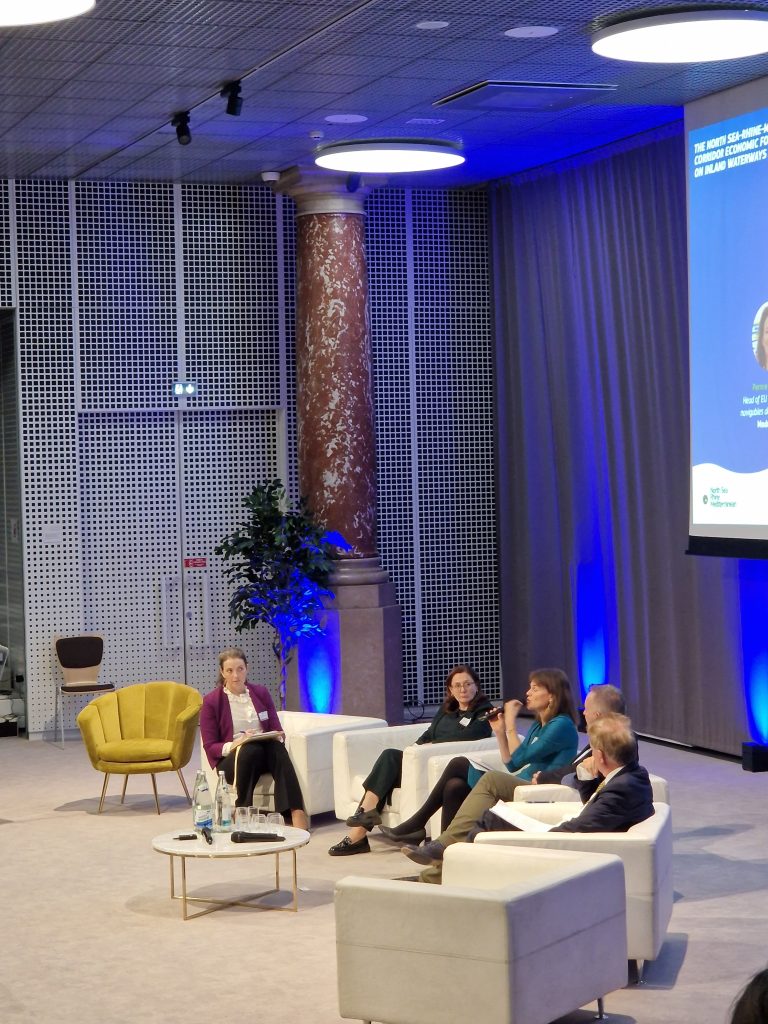
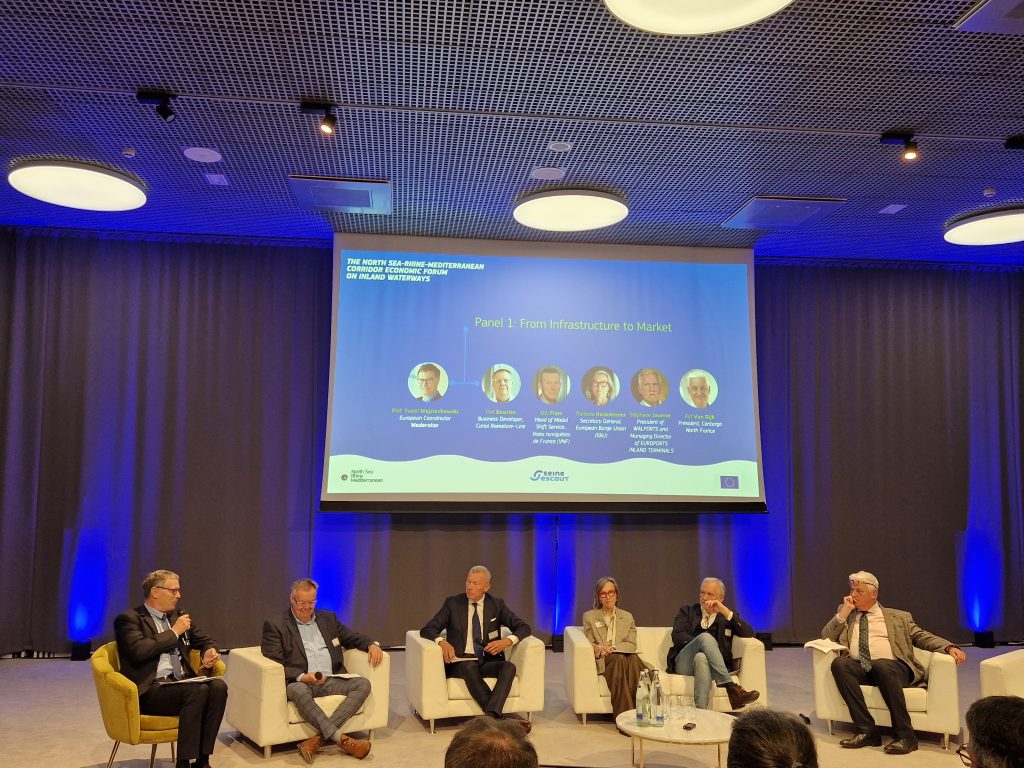
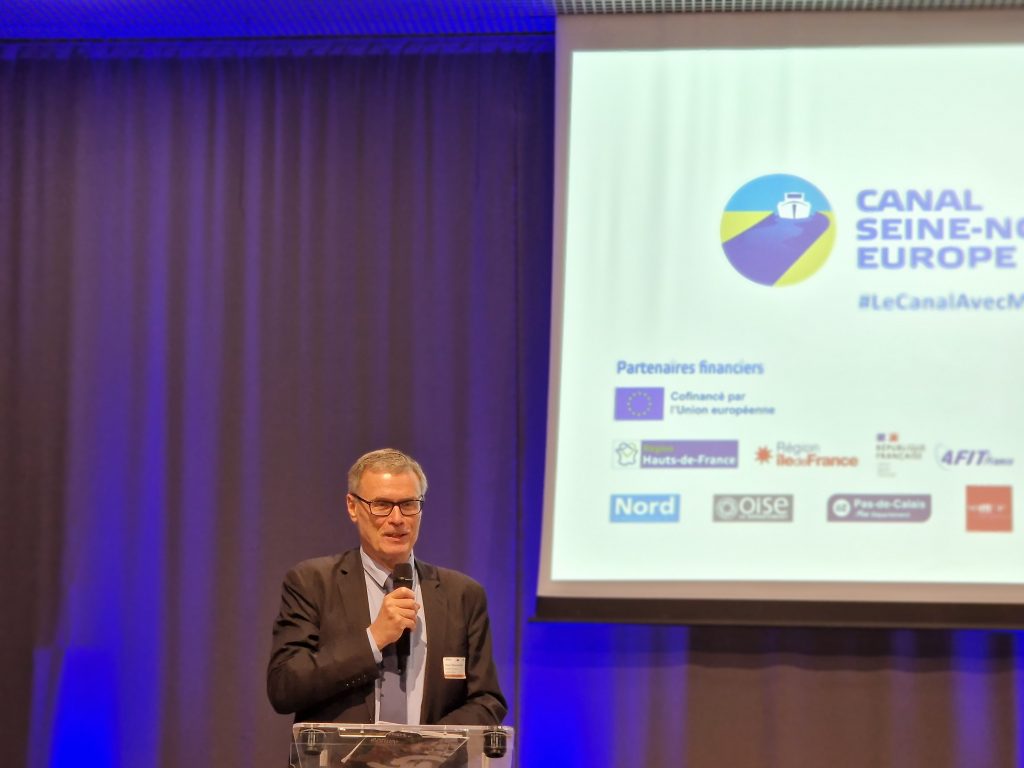
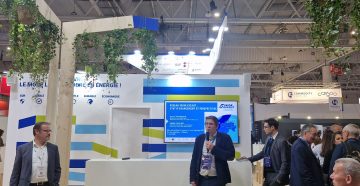
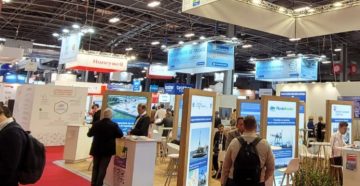
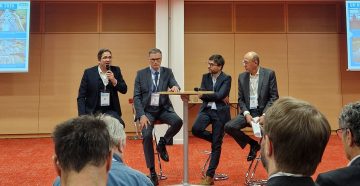
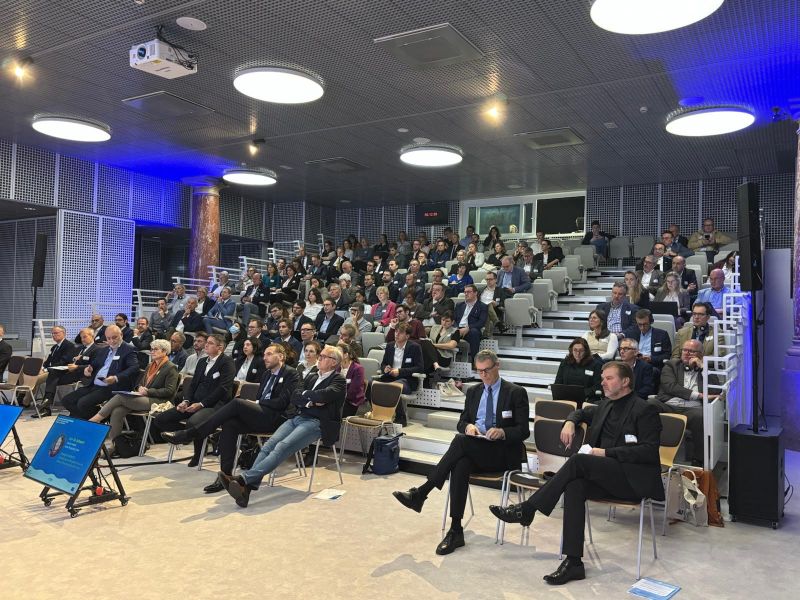
On 12 October 2026, more than 120 representatives from industry, business, public authorities and the inland waterway transport sector gathered at the Palais de la Bourse in Lille for the Economic Forum on Inland Waterways of the North Sea–Rhine–Mediterranean (NSRM) Corridor.
Co-organised by the team of the European Corridor Coordinator, Pawel Wojciechowski, and the Seine–Scheldt EEIG together with its four operators – Voies navigables de France (VNF), the Société du Canal Seine-Nord Europe (SCSNE), De Vlaamse Waterweg and the Service public de Wallonie (SPW) – the event aimed to bring infrastructure stakeholders and market players closer together in order to identify the conditions required to turn investment into tangible economic opportunities.
A European gathering supporting the economic development of inland waterways
As a city whose history is deeply rooted in trade and exchange, Lille provided an ideal setting for this Economic Forum dedicated to the future of inland waterway transport in Europe.
The North Sea–Rhine–Mediterranean Corridor is one of Europe’s major transport corridors. It connects key maritime and inland ports, industrial regions and logistics hubs, relying in particular on a network of more than 5,000 kilometres of inland waterways.
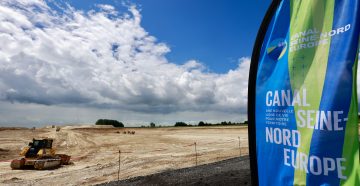
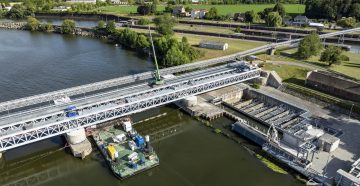
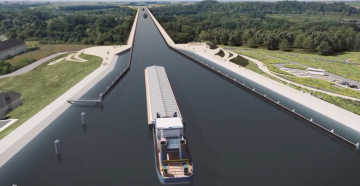
In this context, the development of the large-gauge Seine–Scheldt inland waterway network, including the construction of the Canal Seine-Nord Europe and the modernisation of existing waterways, represents a major step towards strengthening links between the Seine Basin and the inland waterway network of Northern Europe.
However, delivering the infrastructure is only the first step. Its full potential will also depend on the ability of regions and businesses to anticipate new uses, develop suitable logistics services and create new freight flows.
From the Seine–Scheldt Network to economic opportunities across the corridor
The Forum provided an opportunity to discuss the conditions required to transform investment in inland waterways into concrete economic opportunities, as well as the European, regional and economic perspectives surrounding the development of inland waterway transport.
Round-table discussions focused on three complementary challenges:
- From infrastructure to market: how can investment be converted into freight flows? Participants highlighted the importance of anticipating shippers’ needs, removing remaining bottlenecks and developing multimodal solutions tailored to supply chains.
- Ports as economic drivers of the corridor: beyond their role as transhipment platforms, inland ports can become genuine catalysts for industrial and regional development. Appropriate land-use policies, renewed business models and stronger links with major seaports are among the conditions required.
- Cross-border cooperation: the performance of a European network depends on the ability of its stakeholders to coordinate their practices, overcome administrative and regulatory barriers and ensure the continuity of freight flows across borders.
“Infrastructure is a necessary prerequisite, but it is not enough.”
Discussions highlighted a central message: infrastructure is essential, but it cannot deliver its full value on its own. Its potential will only be fully realised if economic stakeholders and regions begin to make use of it today.
Success also depends on anticipating economic needs, implementing suitable land policies, renewing port business models and strengthening connections with major seaports.
The development of inland waterways therefore requires collective commitment from regions, economic stakeholders and European institutions in order to make these infrastructures a lasting driver of competitiveness and the transition towards more sustainable transport.
Believing in the future of inland waterways also means preparing for that future today.
Many thanks to all speakers, participants and partners whose contributions helped make this event a success.